eczema travel tips: sleeping away from home
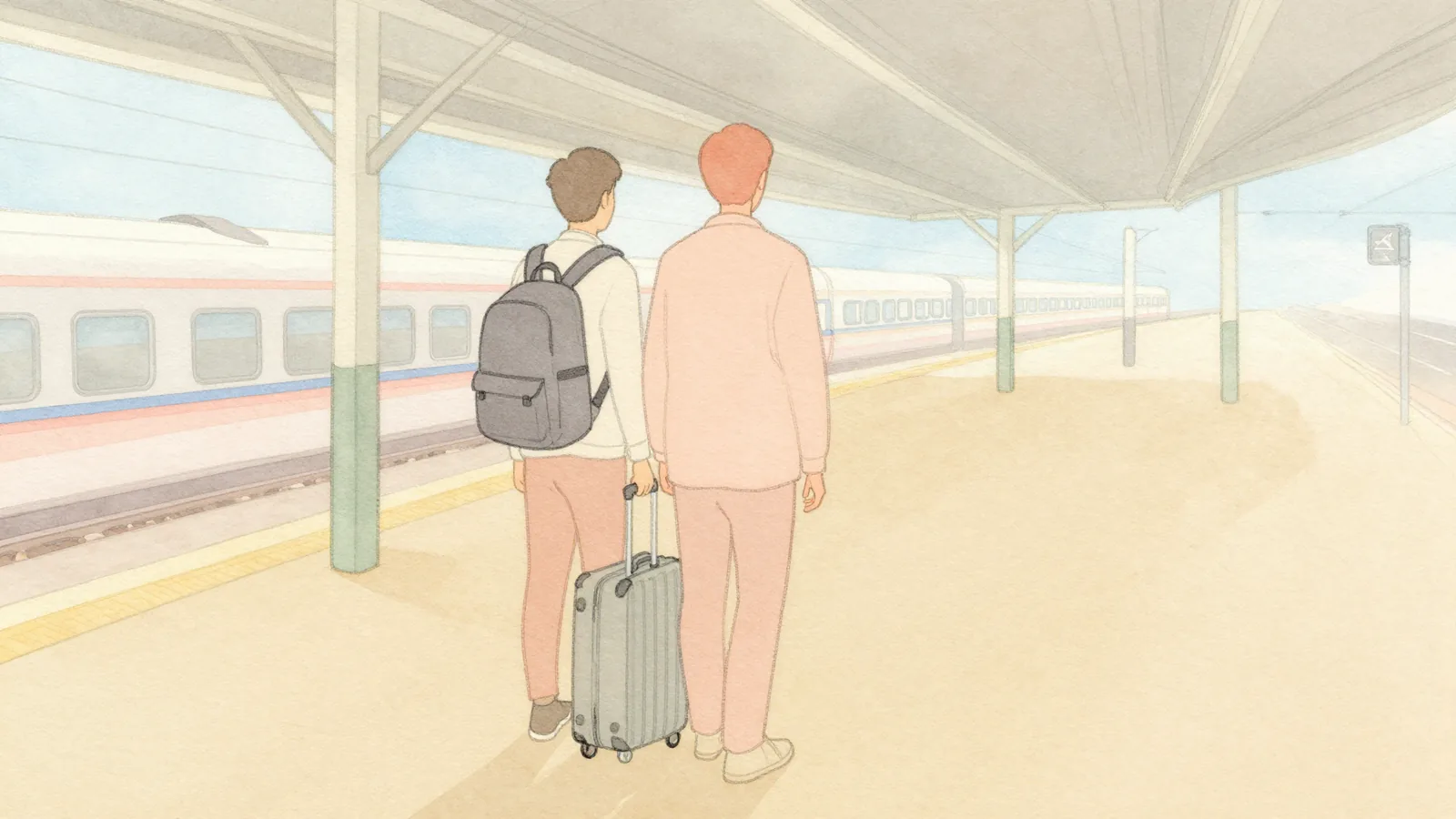
Anyone with eczema who's stayed at university halls, a friend's house, or gone travelling knows the real disruption isn't the trip itself - it's losing every environmental factor you've unconsciously built your routine around.
Why away-from-home sleep is a distinct problem
At home, you've likely tuned your environment without realising it: room temperature, bedding fabric, product placement, a night routine that runs on autopilot. Away from home, all of that resets at once - different bedding, no control over room temperature, and an added layer of anxiety about managing a flare somewhere unfamiliar. This is a genuinely different problem from ordinary sleep disruption, not just a variation of it - for the fundamentals of managing eczema and sleep more generally, see "what no one tells you about eczema and sleep" - https://ayreczema.co.uk/#/articles/what-no-one-tells-you-about-eczema-and-sleep.
Practical packing that actually helps
Bring your own pillowcase, even just one. It's small, doesn't take up space, and removes one entire unknown fabric variable from the equation.
Pack travel-size versions of your actual routine, not a scaled-down substitute. A smaller version of what you'd use at home beats a generic "travel moisturiser" bought at the last minute.
Plan around airline liquid limits in advance if you're flying - creams and emollients count toward cabin liquid allowances, and running out mid-trip because a full-size tub got confiscated at security is a genuinely avoidable problem with a bit of planning (decant into compliant containers, or check your allowance for medically necessary items).
Bring a change of sleepwear you trust, rather than assuming you'll adapt to whatever's available - cotton over synthetic fabrics if that's what works for you at home.
Exam periods and high-stress travel
Exam periods deserve a specific mention: stress is a well-established trigger for eczema flares, and exam season combines high stress with disrupted routine (different revision-crash sleep schedules, less time for a full skincare routine) in a way that can genuinely worsen skin at the worst possible time. If you know exam or high-pressure periods are coming, it's worth front-loading extra product and building in five minutes for your routine even when everything else feels like it has to be sacrificed to revision time.
"The first night at uni I didn't sleep at all - not because of work, just because the room was too warm, the sheets were polyester, and I didn't want to explain to my flatmates why I needed the window open at 2am."
What to tell a host, and how much
Deciding how much to explain to a host, flatmate, or travel companion is its own small hurdle. The most consistently useful approach reported by ayr's peer group: a brief, practical heads-up rather than a full explanation - something like "I have eczema so I might need the room a bit cooler, or step out to reapply cream, hope that's alright" gives someone everything they need to not be confused later, without turning it into a bigger conversation than necessary. It's the same brief, matter-of-fact approach that tends to work best for "telling a new partner you have eczema" - https://ayreczema.co.uk/#/articles/when-to-tell-a-new-partner-about-eczema.
Asking directly for what you need - a cooler room, a different blanket - was consistently rated as better than quietly struggling through a bad night to avoid seeming high-maintenance. Most hosts would rather be asked than watch someone suffer silently and wonder what's wrong.
The bigger picture
None of this fully replicates your home setup, and that's fine - the goal isn't a perfect replica, it's reducing the number of unknowns you're dealing with at once. Fewer surprises means less to manage on top of an already unfamiliar environment.
This article reflects the shared, anonymised experience of members of the ayr Eczema Circle peer support group - it's peer perspective, not medical advice. If travel consistently triggers severe flares despite preparation, it's worth discussing trip-specific treatment adjustments with your GP or dermatologist in advance.
References
NHS, "Atopic eczema - Causes," 2024 - https://www.nhs.uk/conditions/atopic-eczema/causes/
2. UK Civil Aviation Authority, hand luggage liquid rules (medical exemptions) - https://www.caa.co.uk/passengers/resources-for-passengers/liquids-rule/
Related reading
What no one tells you about eczema and sleep - https://ayreczema.co.uk/#/articles/what-no-one-tells-you-about-eczema-and-sleep
When to tell a new partner you have eczema - https://ayreczema.co.uk/#/articles/when-to-tell-a-new-partner-about-eczema
Everything on this page is shared experience from our peer community, not medical advice. For clinical questions, please speak to your GP, dermatologist or NHS 111.